Products
The Defense Security Cooperation University (DSCU) seeks to shape scientific and professional knowledge on Security Cooperation by publishing edited volumes, reports, and occasional papers. The core customers are Security Cooperation practitioners (policymakers, planners, and implementers) who can benefit from scholarly knowledge that is relevant to the practice of Security Cooperation.
Learning Ecosystem
DSCU printed products are one component of a learning ecosystem consisting of knowledge generation, content dissemination, and consultative practice. The goal of this ecosystem is to build intellectual capital in the Security Cooperation enterprise. As products are published, DSCU’s Brigadier General Charles Young Institute for Security Cooperation Research and Lessons Learned will post them here.
DSCU Research Agenda
The DSCU Research Agenda identifies the most significant evidence gaps in security cooperation. Its purpose is to harness the intellectual power of a growing network of scholars in the social sciences and history to deliver high-value research to the security cooperation enterprise. Practitioners recognize the importance of evidence and increasingly demand research to address the challenges they encounter daily. A focused effort will generate reliable answers and build a cumulative foundation of evidence to help practitioners navigate the complex global environment. As a living document, the Research Agenda will evolve to address emerging issues and priorities.
DSCU Case Study Handbook
The DSCU Case Study Handbook is a guide designed to equip the security cooperation workforce and researchers with the framework and tools needed to effectively develop, write, and analyze case studies in and out of the classroom. The handbook supports the advancement of the security cooperation profession by providing clear, proven approaches to developing case studies that illuminate best practices, investigate security cooperation outcomes, and drive evidence-based decision-making.
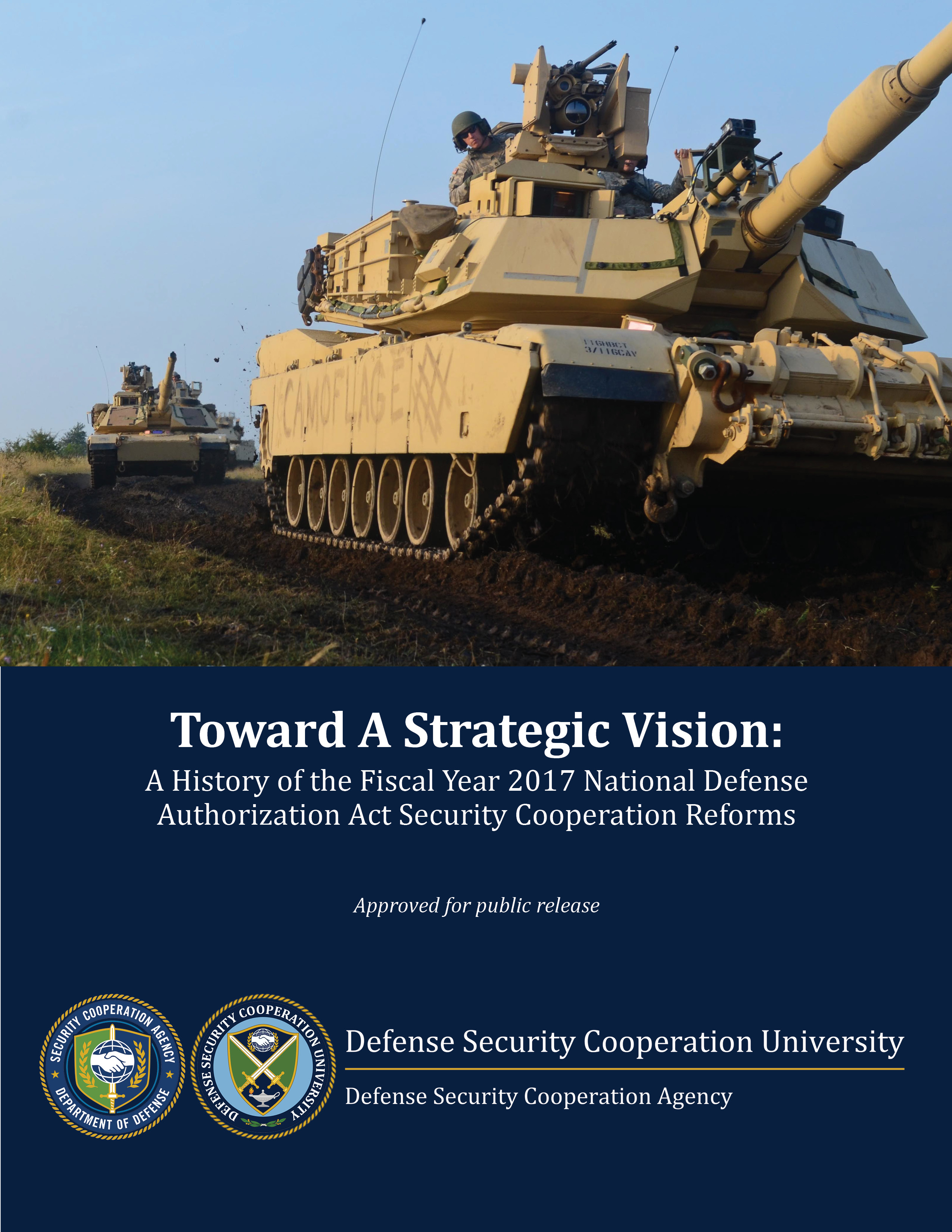
Toward a Strategic Vision: A History of the Fiscal Year 2017 National Defense Authorization Act Security Cooperation Reforms
The DSCU history publication, "Toward a Strategic Vision: A History of the Fiscal Year 2017 National Defense Authorization Act Security Cooperation Reforms," chronicles the transformation of the security cooperation enterprise from a post-9/11 “patchwork” of over one hundred Title 10 authorities into a consolidated, strategic framework. Based on interviews with stakeholders across the security cooperation enterprise and an analysis of primary sources, this report examines the historical context leading to the reforms, the legislative process, implementation, successes, and challenges. The publication helps personnel make more informed decisions in planning, executing, and assessing security cooperation activities. The views expressed in this report are those of the authors and do not necessarily represent the views of the U.S. Department of War or the Defense Security Cooperation University.